
Why Ants Keep Returning to the Same Areas
Many ant infestations begin with only a few visible ants appearing around kitchens, sinks, cupboards, or food storage areas. Even after cleaning or spraying the area, ants often continue returning to the exact same locations repeatedly.
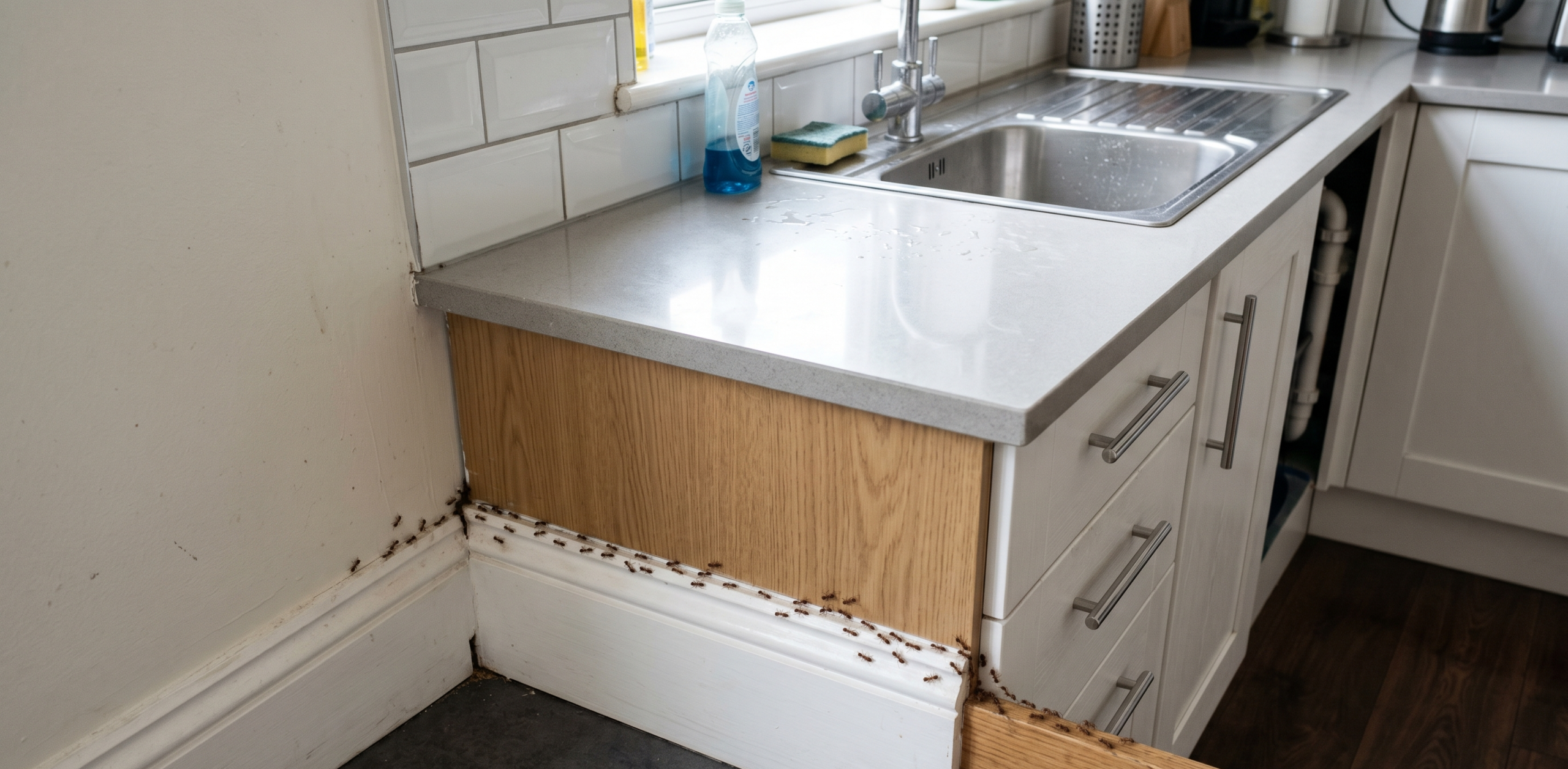
This happens because ants rely on scent trails, food sources, and hidden nesting activity that may still remain active elsewhere inside or outside the property.
Ants Leave Invisible Trails Behind
When worker ants discover a food or moisture source, they leave behind invisible chemical trails that guide the rest of the colony back to the same area.
Once a route becomes established, ants may continue travelling along the same path repeatedly until the food source or nesting activity is fully addressed.
This is why ant activity often keeps reappearing around:
- Kitchen counters
- Sinks and pipework
- Food cupboards
- Pet food areas
- Flooring edges and skirting boards
- Window and door gaps
- Utility rooms
Cleaning Alone Usually Does Not Remove the Colony
Although cleaning visible ant trails is important, it usually does not eliminate the nest itself.
Most ant colonies remain hidden behind walls, beneath flooring, around foundations, inside structural gaps, or outside the property where activity continues unnoticed.
As long as worker ants can still access food, moisture, or entry points, the infestation may continue returning.
DIY Ant Sprays Often Only Reduce Visible Activity
Many DIY sprays kill only the ants visible on surfaces while hidden nesting areas remain unaffected.
In some cases, disturbing ant activity without targeting the colony may even cause ants to spread into additional areas inside the property.
Professional ant pest control in London focuses on locating high-activity areas and applying treatment methods designed to target the colony itself rather than only visible worker ants.
Moisture & Food Sources Continue Attracting Ants
Ant infestations often develop in areas where crumbs, sugary substances, moisture, food residue, or standing water remain available.
Kitchens, utility rooms, communal spaces, and commercial food preparation areas are among the most common locations for recurring ant activity.
Even very small amounts of food residue may continue attracting worker ants indoors.
Hidden Entry Points Allow Ants to Re-Enter the Property
Ants can enter buildings through extremely small gaps around:
- Pipework and utility lines
- Window frames
- Door gaps
- Wall cracks
- Flooring edges
- Structural joints
In flats and shared buildings, ants may also move between neighbouring properties through hidden structural routes.
How Professional Ant Treatment Works
Professional ant treatment commonly uses targeted gel bait designed to work gradually throughout the colony.
Worker ants carry the treatment back to the nest where it spreads through feeding and contact within the colony, helping target hidden nesting activity that surface sprays may not reach effectively.
Additional treatment may also be applied around entry points, visible ant trails, and high-activity areas depending on the infestation severity.
When to Consider a Pest Inspection
If ant activity continues returning despite repeated cleaning or DIY treatment, a professional pest inspection in London may help identify:
- Hidden nesting areas
- Structural access points
- Moisture conditions attracting ants
- Recurring infestation routes
- The most suitable treatment approach
Professional Ant Control Across London
At London Heat Treatment, professional ant pest control services are available across London for homes, flats, restaurants, commercial kitchens, rental properties, and businesses affected by recurring ant infestations.
Professional inspections and targeted treatment plans help address hidden nesting activity and reduce the risk of recurring infestations returning indoors.